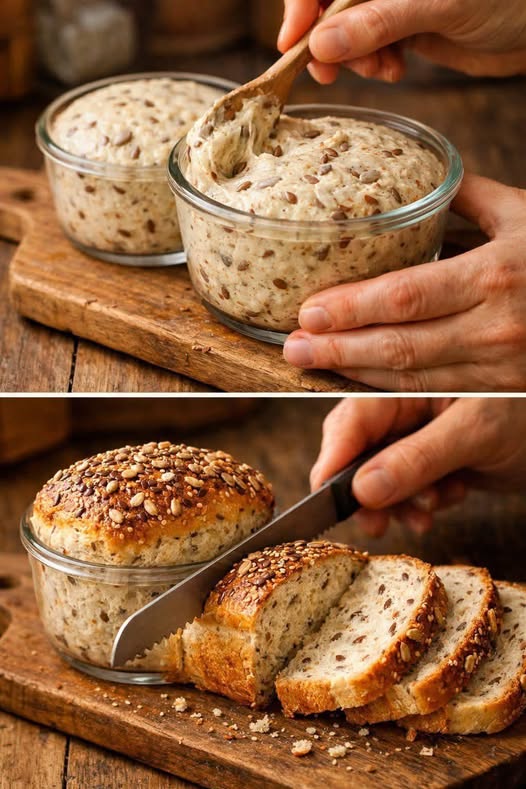
Start by combining the warm water and yeast in a large bowl. Let the mixture sit for about five minutes until the yeast becomes slightly foamy. This step helps activate the yeast and ensures proper fermentation.
Next, add the flour and salt to the bowl. Mix everything together using a spoon or your hands until a sticky dough forms. The dough should not be dry or stiff. Artisan bread dough typically has a slightly wet consistency, which helps create the airy crumb structure.
Once mixed, cover the bowl with plastic wrap or a clean kitchen towel. Allow the dough to rest at room temperature for about 1 to 2 hours. During this time, the yeast will ferment and the dough will rise significantly.
Shaping the Artisan Loaves
After the dough has doubled in size, lightly flour a work surface and gently transfer the dough onto it. Avoid pressing out too much air because those bubbles help create the soft interior texture.
Divide the dough into three equal portions if you want smaller loaves. Shape each portion into an oval or round loaf by gently folding the edges underneath. Place the shaped dough pieces onto a baking tray lined with parchment paper.
Dust the tops lightly with flour and use a sharp knife to score the surface. These shallow cuts allow the bread to expand during baking and create the classic artisan appearance.
Baking the Bread
Preheat your oven to 220°C (425°F). A hot oven is essential for achieving the perfect crust.
Place the tray in the oven and bake for approximately 20 to 25 minutes. The bread should develop a deep golden brown color with a crispy crust. When tapped on the bottom, the loaf should sound hollow, indicating that it is fully baked.
For an extra crispy crust, you can place a small pan of water in the bottom of the oven to create steam during baking.
Tips for Perfect Homemade Bread
Making artisan bread is simple, but a few small techniques can make a big difference.
Always use warm water, not hot water, when activating yeast. Water that is too hot can kill the yeast and prevent the dough from rising.
Allow enough time for fermentation. Slow fermentation improves flavor and texture.
Avoid adding too much flour while shaping the dough. A slightly sticky dough produces lighter bread.
Serving and Storing Artisan Bread
Fresh artisan bread is best enjoyed warm from the oven. It pairs perfectly with butter, olive oil, soups, or sandwiches. The crispy crust and soft interior make it incredibly versatile.
If you have leftovers, store the bread in a paper bag or bread box at room temperature for up to two days. For longer storage, you can freeze the loaves and reheat them later in the oven.
Final Thoughts
Homemade artisan bread is easier to make than many people think. With just a handful of ingredients and simple steps, you can create bakery-quality bread in your own kitchen. The process is relaxing, rewarding, and the results are always delicious.
Once you try baking bread yourself, it often becomes a favorite kitchen tradition. The flavor, texture, and freshness of homemade bread simply cannot be matched by packaged alternatives.
Recent Articles

How Atorvastatin Works – And Why Side Effects Can Appear

Soak Your Feet in Vinegar Once a Week and Watch These 9 Health Problems Disappear

MYTH OR MEDICAL REALITY: DOES EATING RAW ONIONS REALLY CAUSE THIS COMMON HEALTH PROBLEM? (THE TRUTH REVEALED)