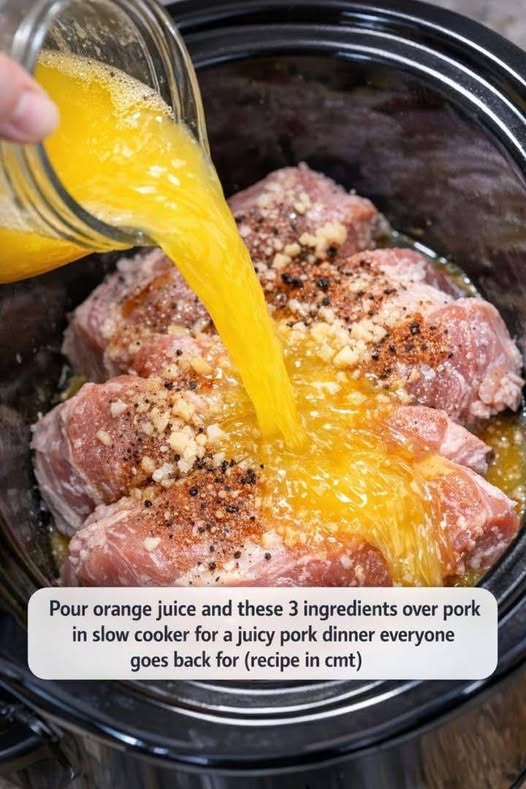
Pork carnitas are a classic Mexican preparation from the state of Michoacán, traditionally made by slowly cooking pork in fat until it’s tender enough to shred, then crisping the edges. This slow cooker version leans on orange juice—common in many home-style carnitas recipes—for brightness and a gentle sweetness that balances the richness of the pork. With only four ingredients, it’s a wonderfully approachable way to bring a bit of taquería flavor into a busy weeknight: you load the pot in the morning, and by dinner you have deeply flavored, fall-apart pork ready for tacos, rice bowls, or burrito fillings.
These pork carnitas are incredibly versatile at the table. I like to tuck the crispy shreds into warm corn tortillas and set out a simple spread: finely chopped white onion, fresh cilantro, lime wedges, and a mild salsa verde. A side of Mexican-style rice or cilantro-lime rice works beautifully, as do brothy black beans or refried pintos. If you’re feeding a crowd, add a crunchy cabbage slaw for contrast and maybe some grilled or sautéed peppers and onions. Leftovers are excellent over a bed of greens with avocado and radishes, or spooned onto tortilla chips and broiled with cheese for quick carnitas nachos.
4-Ingredient Slow Cooker Pork Carnitas with Orange Juice
Ingredients
4 pounds boneless pork shoulder (pork butt), trimmed of excess hard fat and cut into large chunks
1 1/2 cups orange juice (freshly squeezed if possible)
1 tablespoon kosher salt
2 teaspoons ground cumin
Directions
Pat the pork shoulder chunks dry with paper towels. This helps them brown a bit better later when you crisp them.
In a small bowl, stir together the kosher salt and ground cumin. Sprinkle this mixture evenly over the pork, turning the pieces so all sides are well seasoned.
Place the seasoned pork chunks into the slow cooker in an even layer, avoiding too much overlap if possible.
Pour the orange juice over the pork. It should come partway up the sides of the meat without fully submerging it; the pork will release additional juices as it cooks.
see continuation on next page
Recent Articles

How Atorvastatin Works – And Why Side Effects Can Appear

Soak Your Feet in Vinegar Once a Week and Watch These 9 Health Problems Disappear
MYTH OR MEDICAL REALITY: DOES EATING RAW ONIONS REALLY CAUSE THIS COMMON HEALTH PROBLEM? (THE TRUTH REVEALED)