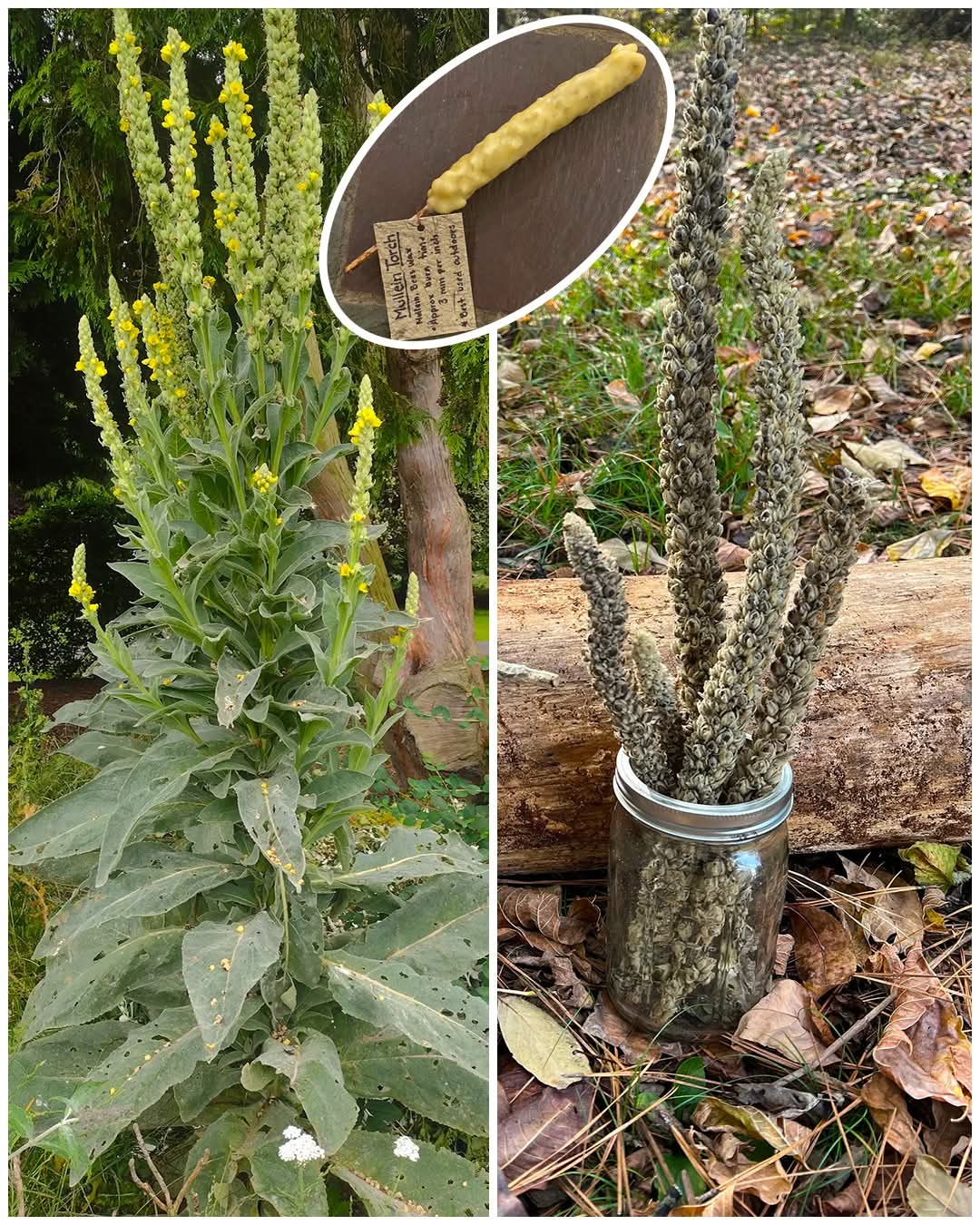
It was often used for:
Ceremonial processions
Nighttime rituals
Seasonal festivals
Protection symbolism (the flame was believed to ward off negative energy)
While these beliefs vary by region, the common thread is that the mullein torch was seen as a source of guidance, cleansing, and safety.
4. Not the Same as Medicinal Mullein
Mullein is widely known today for its respiratory benefits—the leaves and flowers are used in teas, steams, and tinctures.
But it’s important to clarify:
The mullein torch is not inhaled
It is not used as a remedy
Its purpose is external and practical
The torch has its own unique history and function, completely separate from the plant’s medicinal applications.
5. How to Make a Traditional Mullein Torch
Creating one is simple and requires only a few steps.
Materials:Steps:
Collect the stalk when it is fully dry and firm.
Melt the wax or warm the oil.
Dip or brush the stalk until it is fully saturated.
Place it upright and allow it to harden.
Light the top—watch it burn like a natural candle.
This simple method explains why mullein torches were common in times when manufactured candles were rare or expensive.
6. Modern Uses of the Mullein Torch
Even today, the mullein torch continues to have value:
Outdoor ceremonies
Garden decorations
Photography and filmmaking props
Historical reenactments
Natural insect control
Symbolic events or rituals
Its dramatic flame and rustic appearance make it popular for anyone seeking an ancient, traditional look.
Recent Articles

How Atorvastatin Works – And Why Side Effects Can Appear

Soak Your Feet in Vinegar Once a Week and Watch These 9 Health Problems Disappear

MYTH OR MEDICAL REALITY: DOES EATING RAW ONIONS REALLY CAUSE THIS COMMON HEALTH PROBLEM? (THE TRUTH REVEALED)