Nourish the plant well, without overloading it
To bloom, the jade plant needs energy, but not too much. A light and regular supply is quite sufficient. In spring and summer, you can add a mild fertilizer for succulents or a little well-rotted compost. Some gardeners also use a flowering plant fertilizer, once a month at most, to stimulate the formation of flower buds, but never overdo it.
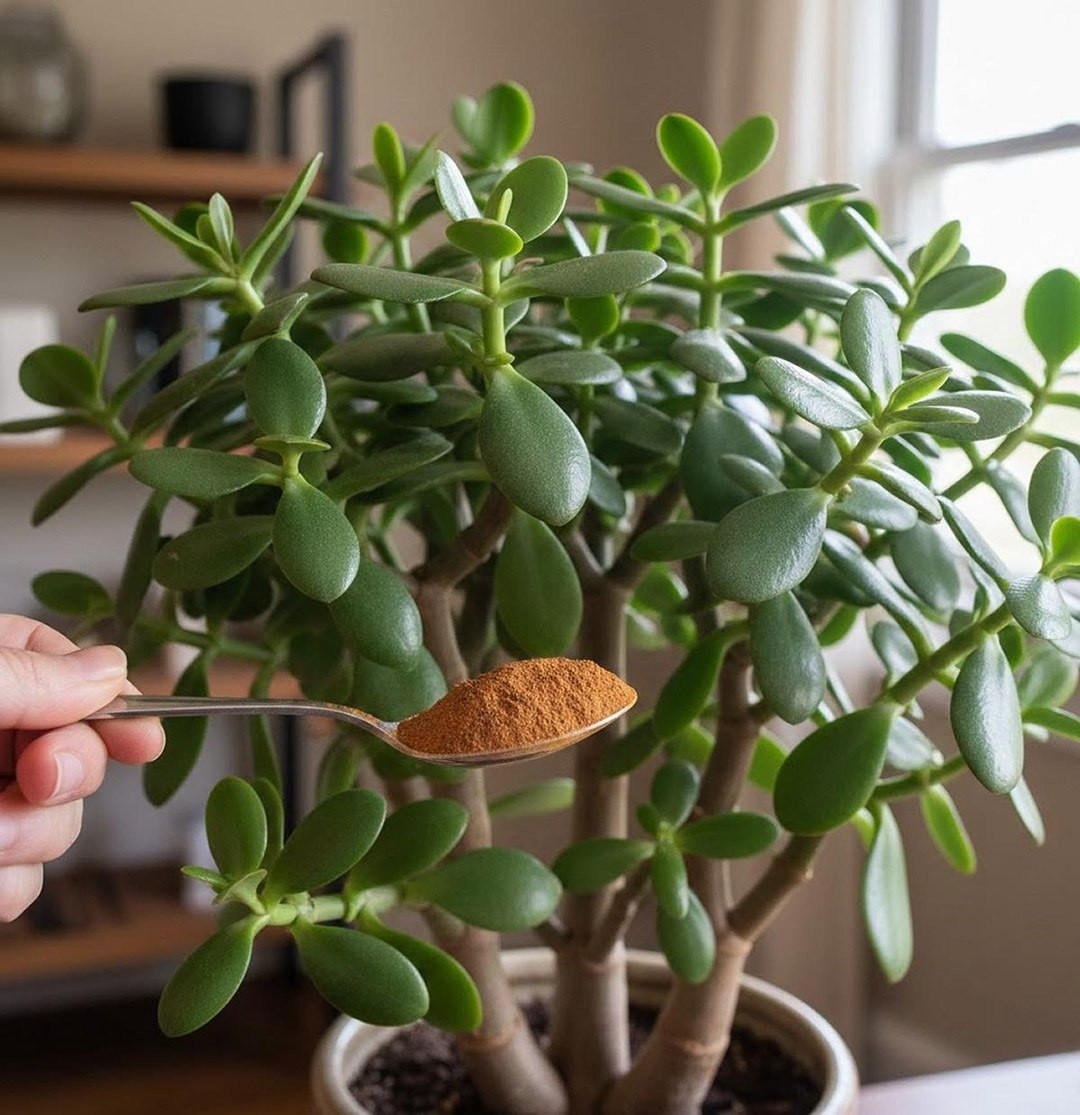
Cinnamon can be used as a natural remedy to protect the jade tree: sprinkled in very small quantities on a cut, a broken leaf or the base of a well-dried cutting, it acts as an antiseptic, limits rot and promotes rapid healing, without disturbing the plant’s growth.
Cold weather, an unexpected ally of flowering
Here’s a little-known tip: jade plants appreciate a slight drop in temperature. In late autumn, place it in a cooler room, away from drafts, with a moderate and stable temperature. This temperature reduction, combined with less watering, mimics natural conditions and sends a clear signal to the plant: it’s time to prepare to bloom.
Avoid overly humid rooms in the house
Although very decorative, the jade plant isn’t suitable for every room. Kitchens and bathrooms, often hot and humid, should be avoided. This atmosphere prevents the plant from thriving properly and inhibits flowering. Opt for a bright living room or a well-ventilated bedroom to provide it with a balanced environment closer to its natural needs.
Recognizing the first jade flowers
When the magic finally happens, the flowers appear at the tips of the branches, in small, star-shaped clusters, usually white with slight pink or purple highlights. They bloom mainly in late winter or early spring and give off a subtle but pleasant fragrance, amply rewarding your patience and care.