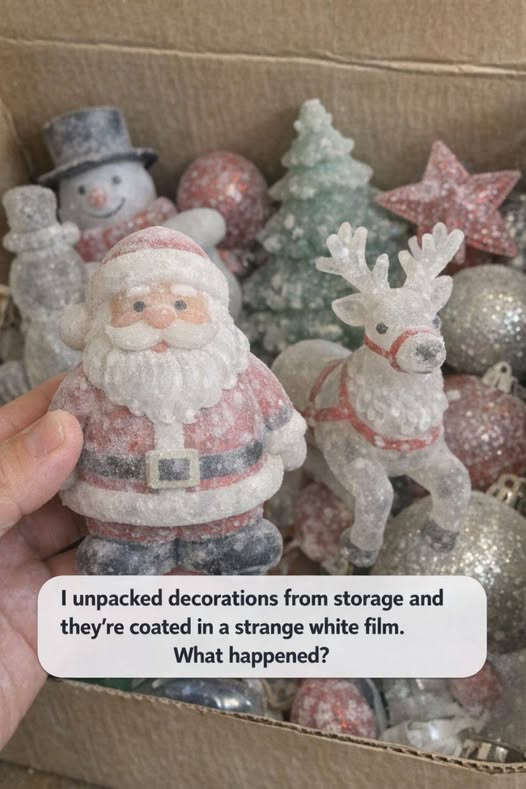
As the holiday season approaches, many people eagerly pull out their stored decorations to bring festive cheer to their homes. However, there can be a less joyous surprise waiting inside those storage boxes—a strange white film coating your beloved decorations. This unwelcome discovery can be both puzzling and frustrating, leaving you wondering what went wrong and how to fix it.
Understanding the reasons behind this mysterious white film can help in preventing it from happening again and ensuring your decorations remain as beautiful as the day you packed them away. In this article, we’ll explore the common causes of this issue and provide practical solutions for cleaning and storing your decorations safely.
1. Why Your Stored Decorations Came Out Covered in a White Film
The appearance of a white film on decorations can be attributed to several factors that often occur during storage. One common cause is the reaction of materials with environmental elements such as moisture, dust, and temperature changes. When decorations are stored in areas where these elements fluctuate, like attics or basements, they become susceptible to chemical and physical changes.
Another factor is the type of material the decorations are made from. Plastics, metals, and certain fabrics can react differently to storage conditions, leading to a white residue. Understanding the interaction between these materials and their environment is key to preventing the mysterious film from forming.
2. How Humidity in Storage Creates a Chalky or Powdery Residue
Humidity is a major culprit when it comes to a chalky or powdery residue on stored items. When the relative humidity in a storage space exceeds 60%, it creates an environment where moisture can condense on surfaces. This moisture can mix with dust and other particles, forming a film that appears white.
In addition, high humidity can cause certain materials to break down or release chemicals that settle as a residue. For instance, metals may oxidize, forming a white powder, while paper and cardboard can absorb moisture, leading to a mildew-like film. Keeping humidity levels below 50% can significantly reduce the risk of this residue forming.
3. Off‑Gassing Plastics and the ‘Bloom’ That Settles on Holiday Decor
Many decorations are made from or contain plastic materials that can emit volatile organic compounds (VOCs) over time, particularly in warm or confined storage spaces. This process, known as off-gassing, can result in a phenomenon called ‘bloom,’ where a white, powdery film settles on surfaces.
Bloom is more pronounced in newer plastic items as they tend to release more VOCs. Over time, as the off-gassing diminishes, the rate of bloom decreases. Proper ventilation and using containers that allow air circulation can help minimize the effects of off-gassing on your holiday decor.
4. When Dust, Dirt, and Airborne Particles Turn into a White Coating
Dust and dirt are ubiquitous and can easily settle on items stored for long periods. In storage areas that are not frequently cleaned, airborne particles can accumulate on decorations, forming a visible white coating. This is especially common in storage spaces near windows or vents, where air circulation can carry more dust.
Over time, these particles can combine with moisture or other environmental factors to form a more stubborn residue. Regular cleaning of storage spaces and sealing stored items in dust-proof containers can help prevent this issue from occurring.
5. Mold and Mildew: Spotting the Difference Between Film and Fuzz
Mold and mildew thrive in damp, dark environments, making them common culprits in storage spaces that lack proper ventilation. While mold typically appears as fuzzy spots, mildew often presents as a flat, white or gray film that can be mistaken for dust or residue.
It’s important to distinguish between benign white films and potentially harmful mold or mildew. Mold can pose health risks and should be handled with caution. Look for signs of moisture damage or a musty odor, which may indicate mold presence. If mold is suspected, it’s best to consult a professional for safe removal.
see continuation on next page
Recent Articles
How Atorvastatin Works – And Why Side Effects Can Appear

Soak Your Feet in Vinegar Once a Week and Watch These 9 Health Problems Disappear

MYTH OR MEDICAL REALITY: DOES EATING RAW ONIONS REALLY CAUSE THIS COMMON HEALTH PROBLEM? (THE TRUTH REVEALED)